
Skimming & re-skims
Glass-flat walls and ceilings, ready for paint. Tired, cracked or artexed surfaces made new.
The detail
A skim is a thin finishing coat trowelled over sound plaster or new board. Done properly it hides every crack, patch and old repair and gives you a surface that looks perfect under any light.
- 01
Full room re-skims
Walls and ceilings brought back to one even, flat surface.
- 02
Artex covered
Textured ceilings bonded and skimmed smooth — no more swirls.
- 03
Ceilings
Overhead work laid on clean and flat, around lights and coving.
- 04
Patch & crack repairs
Old repairs cut back and blended in so they disappear.
- 05
New board finishes
Fresh plasterboard taped and skimmed, ready to decorate.
- 06
Beads & reveals
Window and door reveals squared and edged with crisp beads.
Four steps
The same careful process on every job, so the finish is right first time.
Protect
Floors, joinery and furniture sheeted and sealed before we start.
Prepare
Loose material removed, surfaces bonded, beads set and cracks taped.
Skim
Two coats laid on by hand and trowelled up until dead flat.
Finish
Cleaned down and walked through with you under raking light.
Recent work
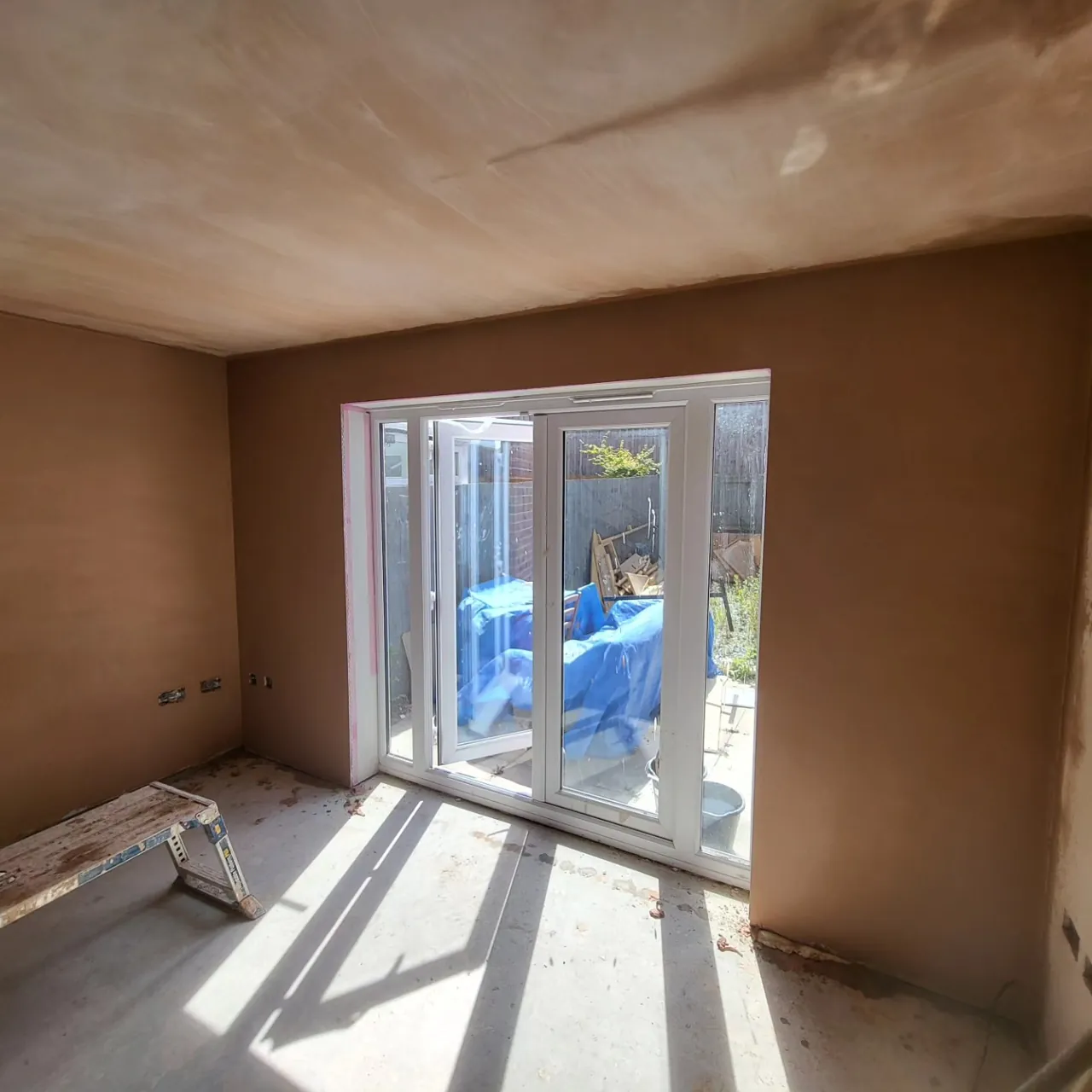
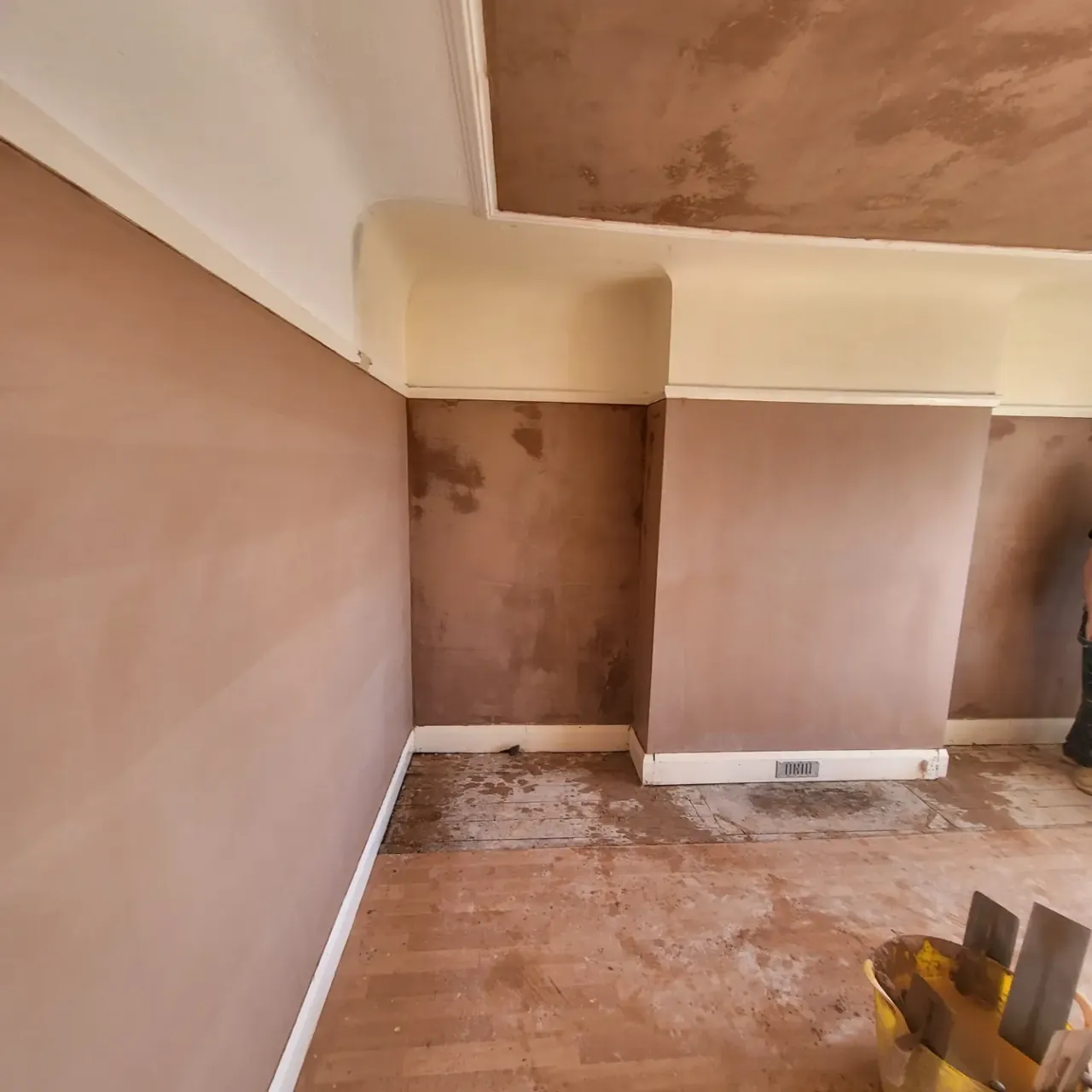
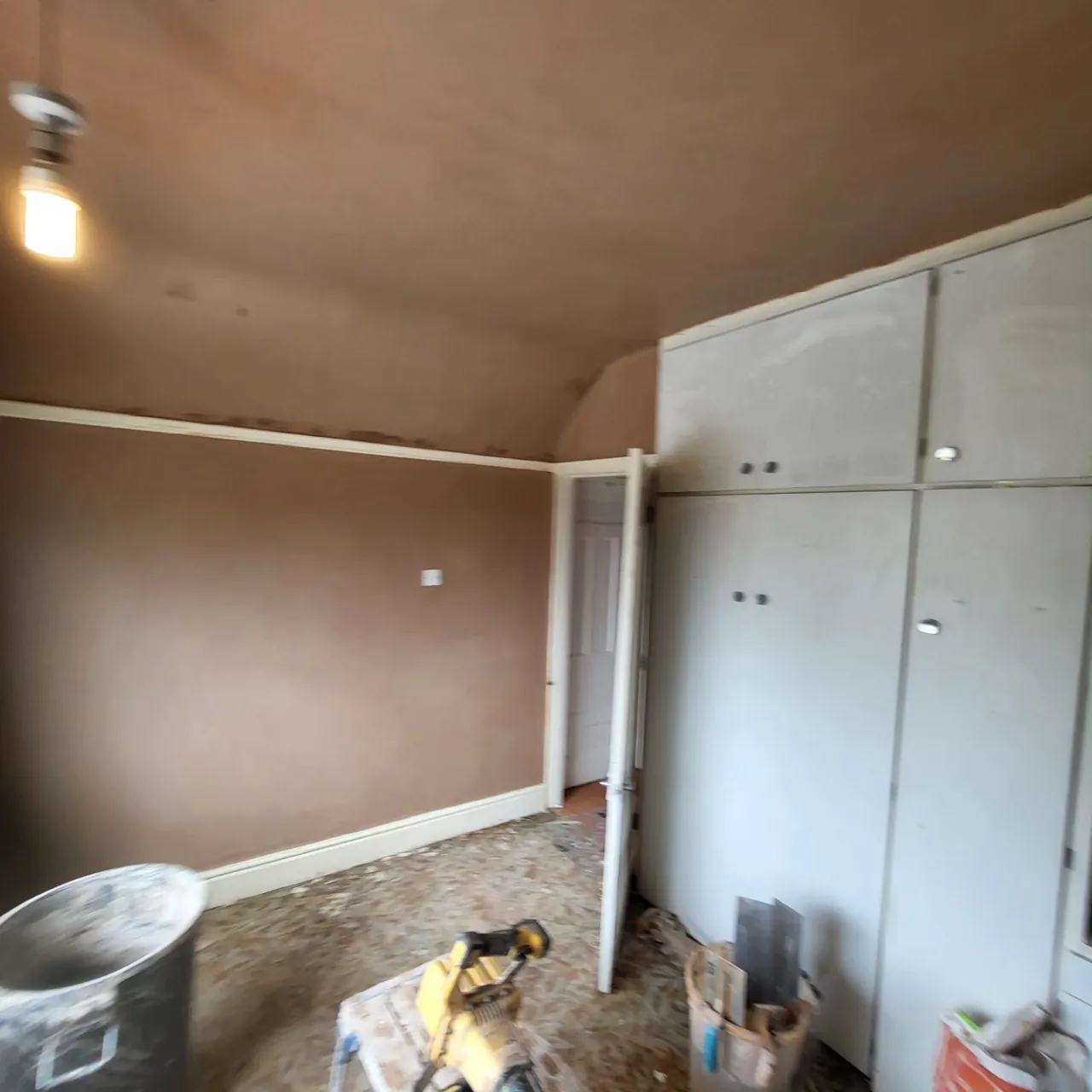
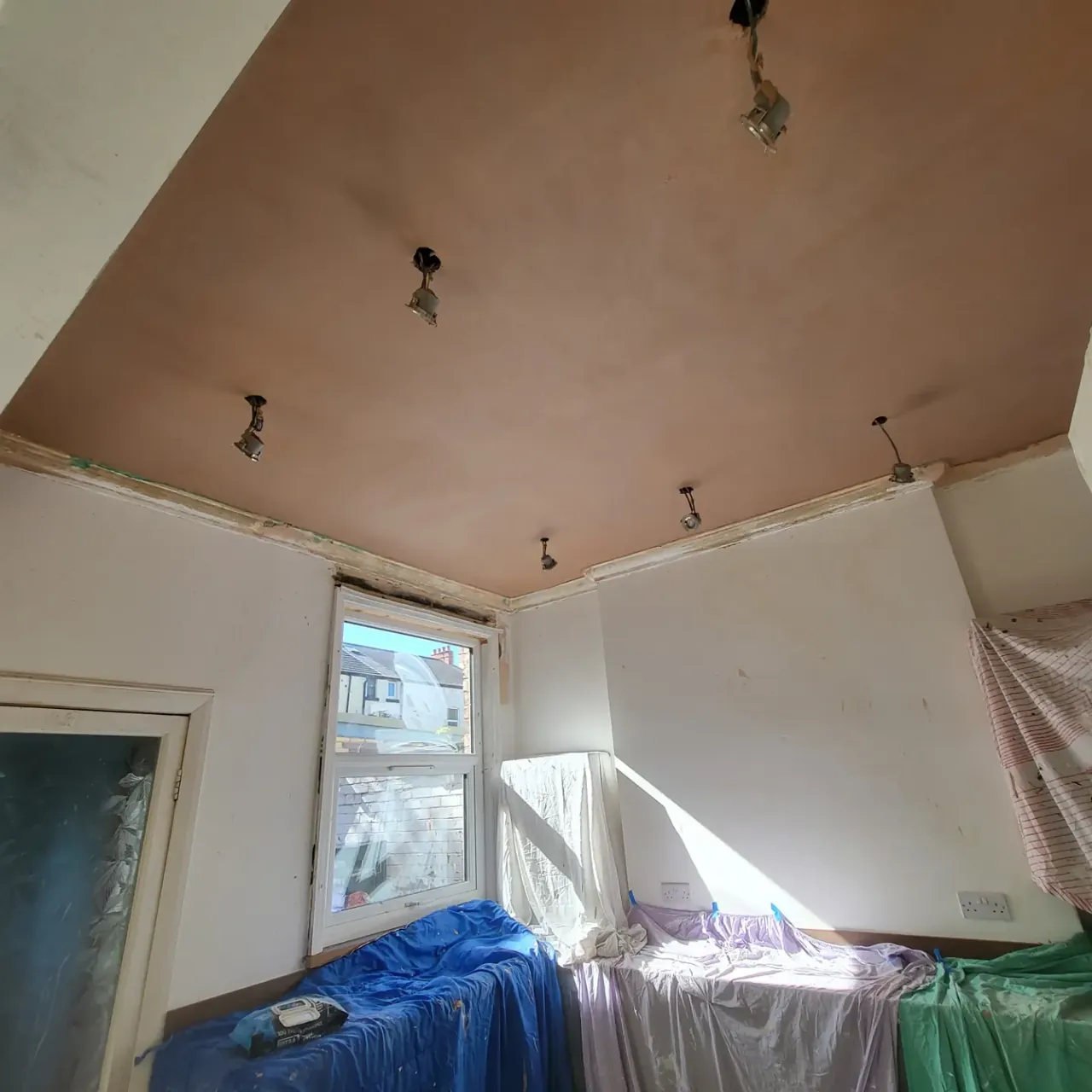
Good to know
How long before I can paint?
Fresh skim needs to dry fully first — usually several days to a week or more, depending on the room, heating and time of year. It goes from dark to an even light pink when it is ready. We'll tell you what to expect for your job.
Do I need a mist coat?
Yes. New plaster is very absorbent, so the first coat should be a watered-down emulsion (a mist coat) to seal it before your top coats.
Can you skim over artex?
In most cases, yes. We seal and bond the artex first, then skim over it. If it's loose or damaged we'll advise before we start.
Will it be messy?
We sheet and seal the room before starting and clean down after. Plastering is never dust-free, but we leave it tidy.